
Enzymes

Enzymes

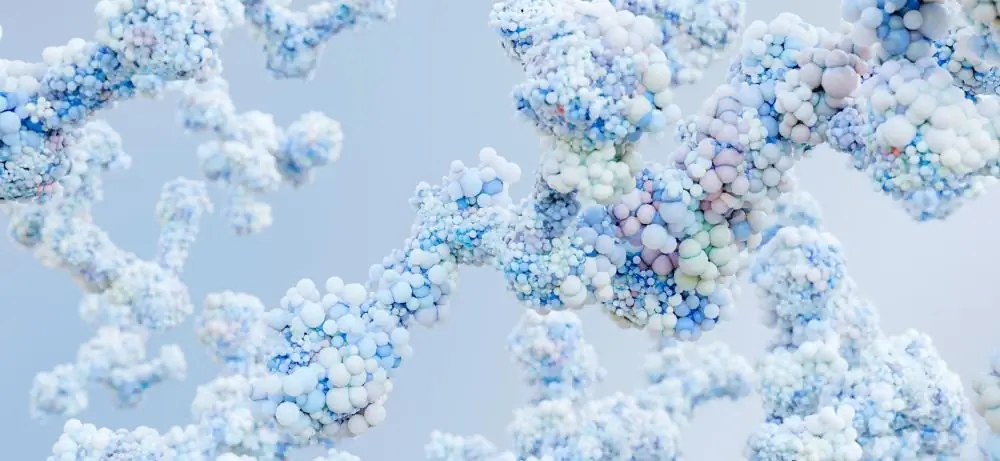
A fundamental task of proteins is to act as enzymes: catalysts that increase the rate of virtually all the chemical reactions within cells. They are highly selective, accelerating both the rate and specificity of metabolic reactions, from the digestion of food to the synthesis of DNA. Most enzymes are proteins, although some catalytic RNA molecules have been identified as well. Cells contain thousands of different enzymes, and their activities determine which of the many possible chemical reactions actually take place within the cell. The binding of a substrate to the active site of an enzyme is a very specific interaction. Once a substrate is bound to the active site of an enzyme, multiple mechanisms can accelerate its conversion to the product of the reaction. Examples of enzymatic conversions of substrates include peptide bond formation or cleavage, hydrolysis and condensation, oxidation and reduction, phosphorylation, and many more. In addition to binding their substrates, the active sites of many enzymes bind other ions or small molecules that participate in catalysis. These molecules are called co-enzymes and/or co-factors. In contrast to substrates, coenzymes are not irreversibly altered by the reactions in which they are involved. While most enzymes move freely (intra- and extracellular) within the organism, many enzymes are anchored to either membranes or receptors. The Axon Ligands™ that interact with enzymatic processes are arranged into the six major classes of enzymes in line with the rules of classification stated by the Nomenclature Committee of the International Union of Biochemistry and Molecular Biology.

Read More
sort-descending
  • N 0430 hydrobromide
    1018
    The price depends on the options chosen on the product page

    From $126.50

  • N 0432 hydrobromide
    1020
    The price depends on the options chosen on the product page

    From Inquiry

  • N 0425 hydrochloride
    1022
    The price depends on the options chosen on the product page

    From $104.50

  • (+)-N 0425 hydrochloride
    1062
    The price depends on the options chosen on the product page

    From $148.50

  • (-)-N 0425 hydrochloride
    1063
    The price depends on the options chosen on the product page

    From $148.50

  • N-Cyclopropyl-N-methyl-2-aminotetraline hydrobromide
    1066
    The price depends on the options chosen on the product page

    From $104.50

  • N-Cyclopropyl-2-aminotetraline hydrochloride
    1067
    The price depends on the options chosen on the product page

    From Inquiry

  • SL 327
    1122
    The price depends on the options chosen on the product page

    From $88.00

  • BACE-1 Inhibitor
    1125
    The price depends on the options chosen on the product page

    From $121.00

  • CHIR98014
    1126
    The price depends on the options chosen on the product page

    From $108.90

  • L 454560
    1127
    The price depends on the options chosen on the product page

    From Inquiry

  • BI 2536
    1129
    The price depends on the options chosen on the product page

    From $99.00

  • BX 912
    1130
    The price depends on the options chosen on the product page

    From $88.00

  • GW 843682X
    1131
    The price depends on the options chosen on the product page

    From $93.50

  • RO 28-0450
    1134
    The price depends on the options chosen on the product page

    From $143.00

More About Enzymes

A fundamental task of proteins is to act as enzymes: catalysts that increase the rate of virtually all the chemical reactions within cells. They are highly selective, accelerating both the rate and specificity of metabolic reactions, from the digestion of food to the synthesis of DNA. Most enzymes are proteins, although some catalytic RNA molecules have been identified as well. Cells contain thousands of different enzymes, and their activities determine which of the many possible chemical reactions actually take place within the cell. The binding of a substrate to the active site of an enzyme is a very specific interaction. Once a substrate is bound to the active site of an enzyme, multiple mechanisms can accelerate its conversion to the product of the reaction. Examples of enzymatic conversions of substrates include peptide bond formation or cleavage, hydrolysis and condensation, oxidation and reduction, phosphorylation, and many more. In addition to binding their substrates, the active sites of many enzymes bind other ions or small molecules that participate in catalysis. These molecules are called co-enzymes and/or co-factors. In contrast to substrates, coenzymes are not irreversibly altered by the reactions in which they are involved. While most enzymes move freely (intra- and extracellular) within the organism, many enzymes are anchored to either membranes or receptors[1]. The Axon Ligands™ that interact with enzymatic processes are arranged into the six major classes of enzymes in line with the rules of classification stated by the Nomenclature Committee of the International Union of Biochemistry and Molecular Biology[2]. [1] The Cell: A Molecular Approach. 2nd edition. Cooper GM. Sunderland (MA): Sinauer Associates; 2000.[2] Enzyme Nomenclature 1992. Academic Press,San Diego,California, ISBN 0-12-227164-5.
Loading...