
Sodium

Sodium

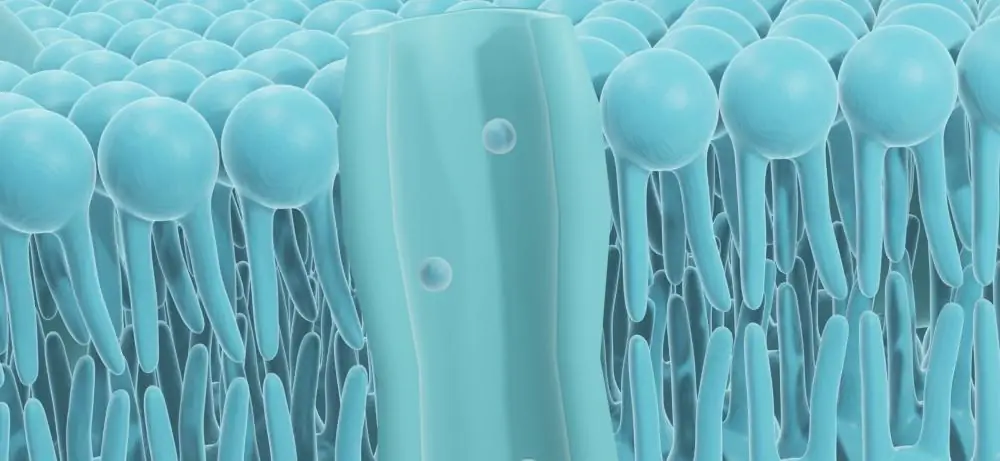
Voltage-gated sodium channels, which produce the inward membrane current necessary for regenerative action potential production within the mammalian nervous system, are expressed in primary sensory neurons and have emerged as important targets in the study of the molecular pathophysiology of pain and in the search for new pain therapies. Nine members of the family of voltage-gated sodium channels have been identified thus far, consisting of a large alpha subunit that associates with other proteins, such as beta subunits. An alpha subunit, consisting on its own of four repeating trans-membrane domains forming the actual pore, forms the core of the channel and is functional on its own. When accessory proteins assemble with alpha subunits, the resulting complex can display altered voltage dependence and cellular localization. Ligand gated sodium channels (e.g. nicotinic receptors) are activated by endogenous acetylcholine. Activation causes a conformational change of the receptor, leading to the opening of the internal pore, and enabling extra-cellular sodium ions to flow into the cell. As the quest for new selective molecules targeting sodium channels for the treatment of chronic pain continues, Axon Medchem intends to expand its range of sodium channel modulators accordingly.

Read More
sort-descending
  • AM 36 dihydrochloride
    1113
    The price depends on the options chosen on the product page

    From $159.50

  • Lacosamide
    1444
    The price depends on the options chosen on the product page

    From $82.50

  • Nav1.7 blocker 52
    1780
    The price depends on the options chosen on the product page

    From $176.00

  • Nav1.7 blocker 24
    1791
    The price depends on the options chosen on the product page

    From $154.00

  • CNV 1014802
    1899
    The price depends on the options chosen on the product page

    From $143.00

  • A 803467
    1915
    The price depends on the options chosen on the product page

    From $104.50

  • XEN 907
    2056
    The price depends on the options chosen on the product page

    From $132.00

  • CNV 1014802 hydrochloride
    2548
    The price depends on the options chosen on the product page

    From $137.50

  • Dronedarone hydrochloride
    3450
    The price depends on the options chosen on the product page

    From $110.00

  • Mexiletine hydrochloride
    3454
    The price depends on the options chosen on the product page

    From $55.00

  • Ranolazine
    3507
    The price depends on the options chosen on the product page

    From $77.00

  • Propafenone hydrochloride
    3644
    The price depends on the options chosen on the product page

    From $66.00

  • DNA binder S20 hydrochloride
    4080
    The price depends on the options chosen on the product page

    From $154.00

13 Items

More About Sodium

Voltage-gated sodium channels, which produce the inward membrane current necessary for regenerative action potential production within the mammalian nervous system, are expressed in primary sensory neurons and have emerged as important targets in the study of the molecular pathophysiology of pain and in the search for new pain therapies[1]. Nine members of the family of voltage-gated sodium channels have been identified thus far, consisting of a large alpha subunit that associates with other proteins, such as beta subunits[2]. An alpha subunit, consisting on its own of four repeating trans-membrane domains forming the actual pore, forms the core of the channel and is functional on its own. When accessory proteins assemble with alpha subunits, the resulting complex can display altered voltage dependence and cellular localization. Ligand gated sodium channels (e.g. nicotinic receptors) are activated by endogenous acetylcholine. Activation causes a conformational change of the receptor, leading to the opening of the internal pore, and enabling extra-cellular sodium ions to flow into the cell.
As the quest for new selective molecules targeting sodium channels for the treatment of chronic pain continues, Axon Medchem intends to expand its range of sodium channel modulators accordingly.


[1] Sodium channels and pain. S.G. Waxman*, S. Dib-Hajj, T.R. Cummins, J.A. Black. Proc. Natl. Acad. Sci. USA 1999, 96, 7635-7639.
[2] InternationalUnion of Pharmacology. XLVII. Nomenclature and structure-function relationships of voltage-gated sodium channels. W.A. Catterall, A.L. Goldin, S.G. Waxman. Pharmacol Rev. 2005, 57, 397-409.

Loading...