
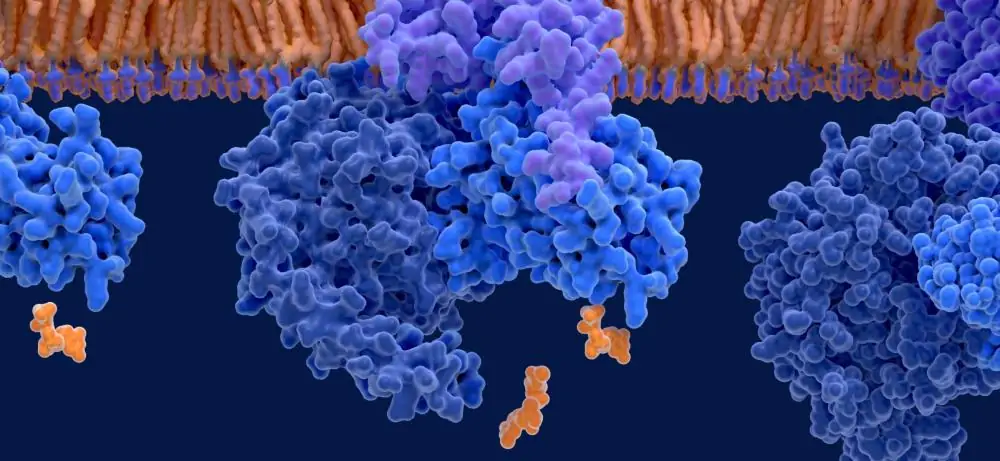
Adrenoceptor α1

Adrenoceptor α1

The classification of alpha and beta subtypes of the adrenergic receptor results from the diverse responses towards adrenergic stimulation. Epinephrine and norepinephrine are the primary adrenergic neurotransmitters. The receptors are part of the super family of metabotropic G-protein coupled receptors (GPCR-A17), and are often referred to as being responsible for the ‘flight or fight response’. Activation of the alpha subtype generally results in vasoconstriction, whereas activation of the beta subtype leads to vasodilatation. While beta blockers are generally known for their management of cardiac arrhythmias, cardioprotection after myocardial infarction (heart attack), angina and hypertension (e.g. Axon 1159 (Celiprolol hydrochloride), and Axon 1518 (Timolol maleate)), in contrast, drugs interacting at the alpha adrenergic receptors are often used for a variety of medical disorders; e.g. for the treatment of hemorrhagic shock (Axon 1154, B-HT 933 dihydrochloride), as an antidepressant, antidiabetic, or to prevent central neurodegenerative disorders (e.g. Axon 1155, Efaroxan hydrochloride), or for the treatment of narcolepsy and sleep disorders (e.g. Axon 1296, Modafinil).

Read More
sort-descending
  • WAY 100635 hydrochloride
    1086
    The price depends on the options chosen on the product page

    From $137.50

  • Desmethyl-WAY 100635 trihydrochloride
    1087
    The price depends on the options chosen on the product page

    From $159.50

  • Clozapine
    1146
    The price depends on the options chosen on the product page

    From $55.00

  • GMC 1-169
    1148
    The price depends on the options chosen on the product page

    From $165.00

  • GMC 61-39
    1149
    The price depends on the options chosen on the product page

    From Inquiry

  • GMC 2-83
    1150
    The price depends on the options chosen on the product page

    From $176.00

  • Modafinil
    1296
    The price depends on the options chosen on the product page

    From $66.00

  • Quetiapine fumarate
    1354
    The price depends on the options chosen on the product page

    From $82.50

  • Iloperidone
    1493
    The price depends on the options chosen on the product page

    From $93.50

  • Asenapine maleate
    1503
    The price depends on the options chosen on the product page

    From $77.00

  • MIBG hemisulfate
    1750
    The price depends on the options chosen on the product page

    From $126.50

  • Prazosin hydrochloride
    2040
    The price depends on the options chosen on the product page

    From $55.00

  • Thioridazine hydrochloride
    2193
    The price depends on the options chosen on the product page

    From $55.00

  • Brexpiprazole dihydrochloride
    2335
    The price depends on the options chosen on the product page

    From $148.50

  • WAY 100635 maleate
    2424
    The price depends on the options chosen on the product page

    From $137.50

Items 1-15 of 21

More About Adrenoceptor α1

The classification of alpha and beta subtypes of the adrenergic receptor results from the diverse responses towards adrenergic stimulation. Epinephrine and norepinephrine are the primary adrenergic neurotransmitters. The receptors are part of the super family of metabotropic G-protein coupled receptors (GPCR-A17), and are often referred to as being responsible for the ‘flight or fight response’. Activation of the alpha subtype generally results in vasoconstriction, whereas activation of the beta  subtype leads to vasodilatation.  While beta blockers  are generally  known for their management of  cardiac arrhythmias, cardioprotection after myocardial infarction (heart attack), angina and hypertension (e.g. Axon 1159 (Celiprolol hydrochloride), and Axon 1518 (Timolol maleate))[1], in contrast, drugs interacting at the alpha adrenergic receptors are often used for a variety of medical disorders; e.g. for the treatment of hemorrhagic shock (Axon 1154, B-HT 933 dihydrochloride)[2], as an antidepressant, antidiabetic, or to prevent central neurodegenerative disorders (e.g. Axon 1155, Efaroxan hydrochloride)[3], or for the treatment of narcolepsy and sleep disorders (e.g. Axon 1296, Modafinil)[4].

(Nor-) Adrenergic receptor subtypes listed: Adrenoceptor α1Adrenoceptor α2Adrenoceptor β1Adrenoceptor β2Adrenoceptor β3


[1] G-Protein-coupled receptors: Better beta-blockers. J. Owens. Nature Reviews Drug Discovery 2005, 4, 371.
[2] Pressor effects of the alpha 2-adrenoceptor agonist B-HT 933 in anaesthetized and haemorrhagic rats: comparison with the haemodynamic effects of amidephrine. M. R. MacLean, M. Thomson, C. R. Hiley. Br J Pharmacol. 1989, 97, 419-432.
[3] Use of efaroxan and derivatives thereof for the treatment of Alzheimer's disease. F. Colpaert et al.US patent US4855385, 1989.
[4] Randomized trial of modafinil as a treatment for the excessive daytime somnolence in narcolepsy.  Becker PM, et al. Neurology 2000, 54, 1166-1175.

Loading...