
CFTR

CFTR

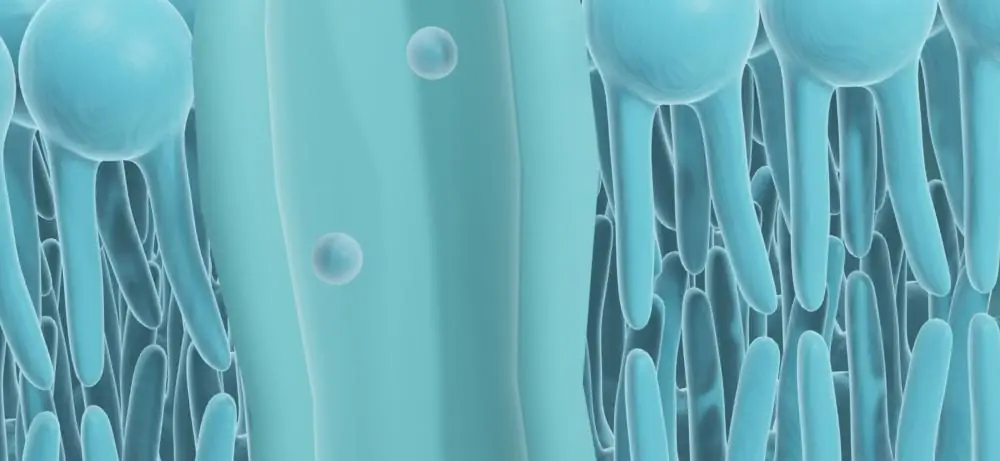
Cystic fibrosis transmembrane conductance regulator (CFTR) is an ABC (ATP-binding cassette) transporter-class ion channel that transports chloride and thiocyanate ions across epithelial cell membranes. Like the P2X receptors, the CFTR has an ATP binding domain, and is considered a cAMP-activated ATP-gated anion channel. It is found in the epithelial cells of many organs including the lung, liver, pancreas, digestive tract, reproductive tract, and skin. Chloride transport through the CFTR channel works in concert with sodium transport through epithelial sodium channels (ENaC) to maintain salt, fluid, and pH homeostasis in various epithelial tissues. Mutations of the CFTR gene affect functioning of the chloride ion channels in these cell membranes, leading to cystic fibrosis and congenital absence of the vas deferens.

Read More
sort-descending
  • CoPo 22
    1763
    The price depends on the options chosen on the product page

    From $132.00

  • VX 661
    2169
    The price depends on the options chosen on the product page

    From $88.00

  • PPQ 102
    2295
    The price depends on the options chosen on the product page

    From $110.00

  • VX 770
    2503
    The price depends on the options chosen on the product page

    From $137.50

  • Adjudin
    2552
    The price depends on the options chosen on the product page

    From $137.50

  • GlyH 101
    2572
    The price depends on the options chosen on the product page

    From $115.50

  • Lumacaftor
    3234
    The price depends on the options chosen on the product page

    From $77.00

  • Ataluren
    4049
    The price depends on the options chosen on the product page

    From $121.00

8 Items

More About CFTR

Cystic fibrosis transmembrane conductance regulator (CFTR) is an ABC (ATP-binding cassette) transporter-class ion channel that transports chloride and thiocyanate ions across epithelial cell membranes[1]. Like the P2X receptors, the CFTR has an ATP binding domain, and is considered a cAMP-activated ATP-gated anion channel. It is found in the epithelial cells of many organs including the lung, liver, pancreas, digestive tract, reproductive tract, and skin. Chloride transport through the CFTR channel works in concert with sodium transport through epithelial sodium channels (ENaC) to maintain salt, fluid, and pH homeostasis in various epithelial tissues. Mutations of the CFTR gene affect functioning of the chloride ion channels in these cell membranes, leading to cystic fibrosis and congenital absence of the vas deferens[2].


[1] The ABC protein turned chloride channel whose failure causes cystic fibrosis. D.C. Gadsby, P. Vergani,  L. Csanády. Nature 2006, 440, 477-483.
[2] Cystic fibrosis transmembrane regulator protein mutations: 'class' opportunity for novel drug innovation. K.D. MacDonald, K.R. McKenzie, P.L.Zeitlin. Paediatr. Drugs 2007, 9, 1-10.

Loading...