
Bulk Inquiry
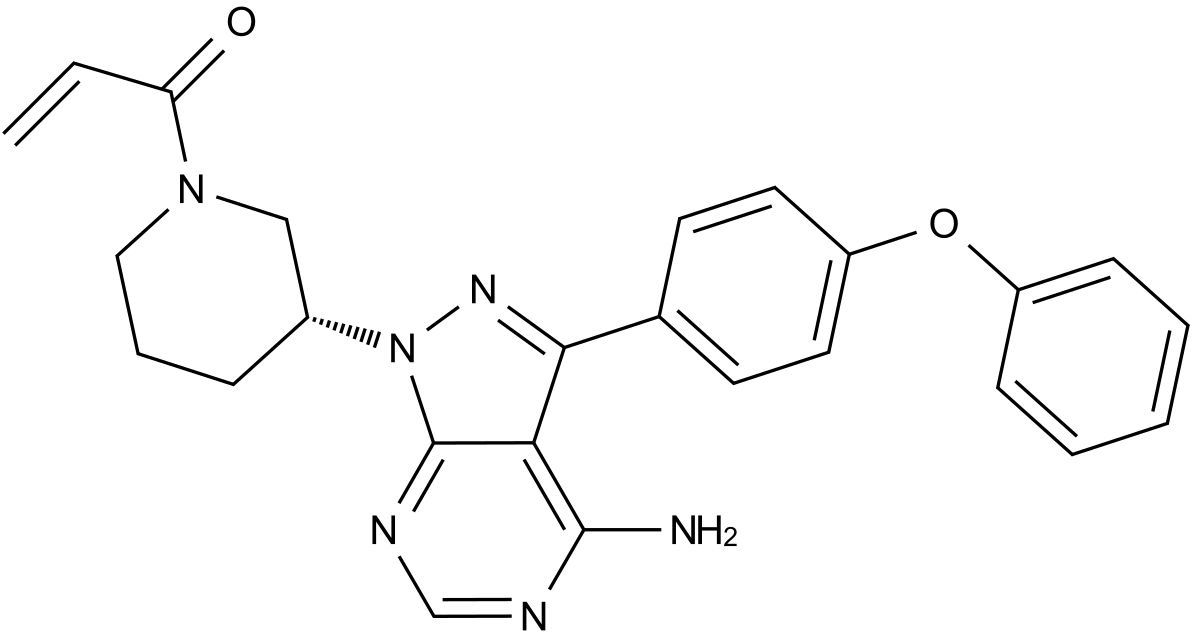
PCI 32765
- Ibrutinib
Axon 1858
CAS:
936563-96-1
Purity:
99%
- Soluble in DMSO
- MF: C25H24N6O2
- MW: 440.5
Description
PCI 32765 (Ibrutinib) is an orally bioavailable, highly selective Bruton's tyrosine kinase (BTK) inhibitor that blocks B-cell receptor signaling and malignant B-cell growth.
BTK is a key kinase downstream of the B-cell receptor, regulating survival, activation and proliferation of normal and malignant B cells. PCI 32765 is used as a clinically relevant tool for B-cell signaling and covalent kinase inhibition research.
Key Features
- Selective BTK inhibitor
- Blocks B-cell receptor-mediated signaling
- Suppresses growth of BTK-dependent malignant B cells
- Clinically relevant covalent kinase inhibitor reference compound
Applications
- BTK enzyme and cellular signaling assays
- B-cell receptor pathway research
- B-cell malignancy model studies
- Covalent kinase inhibitor pharmacology
More Information
| Parent CAS No. | 936563-96-1 |
|---|---|
| Chemical Name | (R)-1-(3-(4-amino-3-(4-phenoxyphenyl)-1H-pyrazolo[3,4-d]pyrimidin-1-yl)piperidin-1-yl)prop-2-en-1-one |
| MFCD | N.A. |
| Short Description | BTK inhibitor |
PCI 32765 (Ibrutinib)
selective BTK inhibitor
PCI 32765
Ibrutinib
PCI32765
BTK
Inhibitor
BTK enzyme and cellular signaling assays
B-cell receptor pathway research
B-cell malignancy model studies
Covalent kinase inhibitor pharmacology
kinase signaling
receptor selectivity
signal transduction
receptor pharmacology
drug discovery
enzyme pharmacology
CAS 936563-96-1
Axon Medchem
Axon 1858
Supplier
Vendor
References
- Z Pan et al. Discovery of selective irreversible inhibitors for Bruton's tyrosine kinase. ChemMedChem 2007, 2(1), 58–61.
- LA Honigberg et al. The Bruton tyrosine kinase inhibitor PCI-32765 blocks B-cell activation and is efficacious in models of autoimmune disease and B-cell malignancy. Proc. Nat. Acad. Sci. USA 2010, 107(29), 13075–80.
- ES Winer et al. PCI-32765: a novel Bruton's tyrosine kinase inhibitor for the treatment of lymphoid malignancies. Expert Opin. Investig. Drugs. 2012, 21(3), 355-61.
Other Categories
Get a Quote for
Loading...