
More About A3
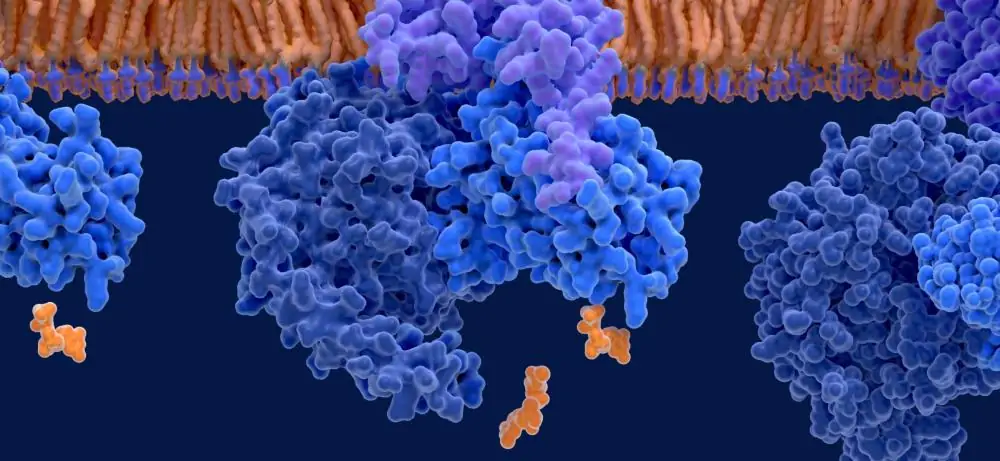
Four subtypes of adenosine receptors (ARs) have been identified among vertebrates so far (A1, A2A, A2B and A3). These receptors all have a distinctive pharmacological profile, tissue distribution and effector coupling[1]. All four members are coupled to a G-protein (A1 and A3 subtypes to Gi, and A2 subtypes to Gs (GPCR-A18)). As a result, stimulation of A1 and A3 subtypes in general results in neurotransmission through the inhibition of adenylate cyclase and phospholipase C, whereas stimulation of the A2 subtypes leads to enhanced neurotransmission. More specifically, A1 and A2A receptors play a role in regulating myocardial oxygen consumption and coronary blood flow. Besides, stimulation of the A1 receptor has a myocardial depressant effect by decreasing the conduction of electrical impulses and suppressing pacemaker cell function, resulting in a decrease in heart rate. Recently, clinical evidence was found for the A3 receptor to be involved in rheumatoid arthritis, among other myocardial functions.[2] Interestingly, evidence is growing for a certain role of adenosine receptors in the field of oncology.[3]
Adenosine receptor subtypes listed: A1, A2A, A3
[1] InternationalUnion of Basic and Clinical Pharmacology. LXXXI. Nomenclature and classification of adenosine receptors—an update. B.B. Fredholm, A.P. Ijzerman, K.A. Jacobson, J. Linden, C.E. Muller. Pharmacol. Rev. 2011, 63, 1-34.
[2] Clinical evidence for utilization of the A3 adenosine receptor as a target to treat rheumatoid arthritis: data from a phase II clinical trial. MH Silverman et al. J. Rheumatol.2008, 35, 41-48.
[3] Adenosine receptors and cancer. Gessi S, Merighi S, Sacchetto V, Simioni C, Borea PA. Biochim Biophys Acta. 2011, 1808, 1400-12.