
IR

IR

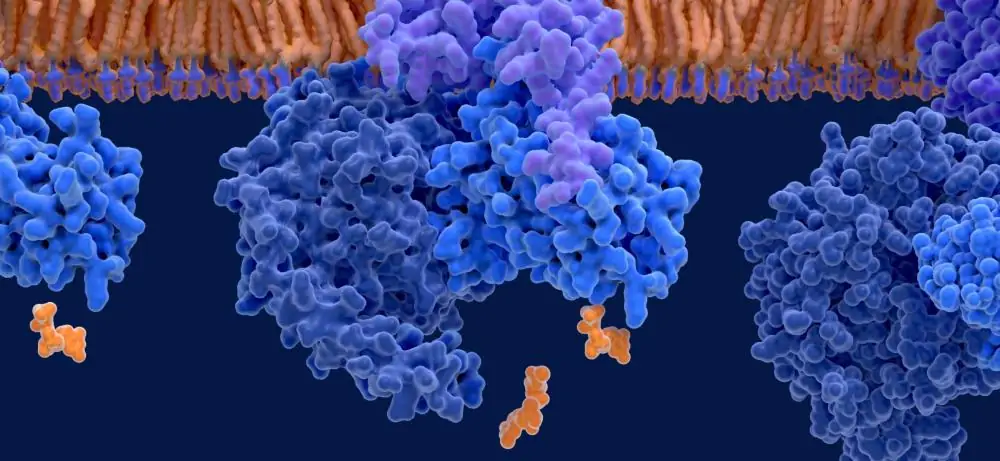
The insulin receptor (IR) is an ancient tyrosine kinase (TK) receptor found across a wide phylogeny of organisms, ranging from those as primitive as cnidarians and insects through to vertebrates. In higher organisms, it plays an essential role in glucose homeostasis. In mammals, the insulin receptor (IR) gene has acquired an additional exon, exon 11. This exon may be skipped in a developmental and tissue-specific manner. The IR, therefore, occurs in two isoforms (exon 11 minus IR-A and exon 11 plus IR-B). IR-A is predominantly expressed during prenatal life. It enhances the effects of IGF-II during embryogenesis and fetal development. It is also significantly expressed in adult tissues, especially in the brain. Conversely, IR-B is predominantly expressed in adult, well-differentiated tissues, including the liver, where it enhances the metabolic effects of insulin. Dysregulation of IR splicing in insulin target tissues may occur in patients with insulin resistance; however, its role in type 2 diabetes is unclear. The recognition that IR-A is aberrantly expressed in cancer cells has provided a framework for better understanding of the cancer-promoting effects of hyperinsulinemia. Moreover, both insulin and IGFs synergize with sex steroids in the promotion of sex steroid-sensitive tumors. Taken together, inhibition of IR underscore the utility of preventing the development of obesity and T2DM and consequent hyperinsulinemia as an effective cancer prevention strategy.

Read More
sort-descending
  • GSK 1838705A
    2267
    The price depends on the options chosen on the product page

    From $121.00

1 Item

More About IR

The insulin receptor (IR) is an ancient tyrosine kinase (TK) receptor found across a wide phylogeny of organisms, ranging from those as primitive as cnidarians and insects through to vertebrates. In higher organisms, it plays an essential role in glucose homeostasis[1]. In mammals, the insulin receptor (IR) gene has acquired an additional exon, exon 11. This exon may be skipped in a developmental and tissue-specific manner. The IR, therefore, occurs in two isoforms (exon 11 minus IR-A and exon 11 plus IR-B). IR-A is predominantly expressed during prenatal life. It enhances the effects of IGF-II during embryogenesis and fetal development. It is also significantly expressed in adult tissues, especially in the brain. Conversely, IR-B is predominantly expressed in adult, well-differentiated tissues, including the liver, where it enhances the metabolic effects of insulin. Dysregulation of IR splicing in insulin target tissues may occur in patients with insulin resistance; however, its role in type 2 diabetes is unclear. The recognition that IR-A is aberrantly expressed in cancer cells has provided a framework for better understanding of the cancer-promoting effects of hyperinsulinemia. Moreover, both insulin and IGFs synergize with sex steroids in the promotion of sex steroid-sensitive tumors. Taken together, inhibition of IR underscore the utility of preventing the development of obesity and T2DM and consequent hyperinsulinemia as an effective cancer prevention strategy[2].


[1] CW Ward et al. Ligand-induced activation of the insulin receptor: a multi-step process involving structural changes in both the ligand and the receptor. Bioessays. 2009 Apr;31(4):422-34.
[2] A Belfiore et al. Insulin receptor isoforms and insulin receptor/insulin-like growth factor receptor hybrids in physiology and disease. Endocr Rev. 2009 Oct;30(6):586-623.
Loading...