
TRESK

TRESK

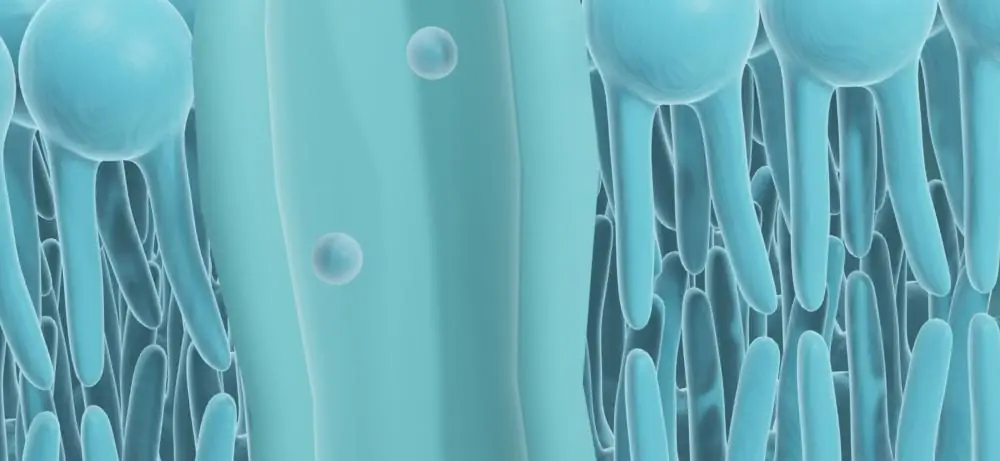
TWIK-related spinal cord K+ channel (TRESK) is the gene product of KCNK18, the last discovered leak potassium K2P channel gene. Under resting conditions, TRESK is constitutively phosphorylated at two regulatory regions. Protein kinase A (PKA) and microtubule affinity-regulating (MARK) kinases can be applied in experiments to phosphorylate these sites of TRESK expressed in Xenopus oocytes, respectively. Upon generation of a calcium signal, TRESK is dephosphorylated and thereby activated by calcineurin. In this process, the binding of calcineurin to the channel by non-catalytic interacting sites is essential. The phosphorylation/dephosphorylation regulatory process is modified by 14-3-3 proteins.

Read More
sort-descending
  • A2764 dihydrochloride
    3019
    The price depends on the options chosen on the product page

    From $115.50

  • A2793
    3060
    The price depends on the options chosen on the product page

    From $104.50

2 Items

More About TRESK

TWIK-related spinal cord K+ channel (TRESK) is the gene product of KCNK18, the last discovered leak potassium K2P channel gene. Under resting conditions, TRESK is constitutively phosphorylated at two regulatory regions. Protein kinase A (PKA) and microtubule affinity-regulating (MARK) kinases can be applied in experiments to phosphorylate these sites of TRESK expressed in Xenopus oocytes, respectively. Upon generation of a calcium signal, TRESK is dephosphorylated and thereby activated by calcineurin. In this process, the binding of calcineurin to the channel by non-catalytic interacting sites is essential. The phosphorylation/dephosphorylation regulatory process is modified by 14-3-3 proteins[1].


[1] P Enyedi et al. Properties, regulation, pharmacology, and functions of the K2p channel, TRESK. Pflugers Arch. 2015 May;467(5):945-58.
Loading...