
SUCNR

SUCNR

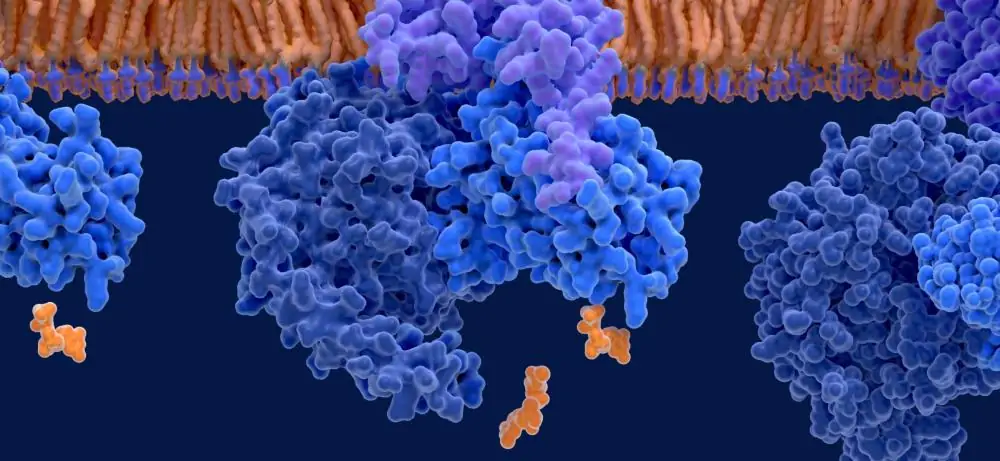
SUCNR1 (or GPR91) belongs to the family of G protein-coupled receptors (GPCR), which represents the largest group of membrane proteins in human genome. The majority of marketed drugs targets GPCRs, directly or indirectly. SUCNR1 has been classified as an orphan receptor until a landmark study paired it with succinate, a citric acid cycle intermediate. According to the current paradigm, succinate triggers SUCNR1 signaling pathways to indicate local stress that may affect cellular metabolism. SUCNR1 implication has been well documented in renin-induced hypertension, ischemia/reperfusion injury, inflammation and immune response, platelet aggregation and retinal angiogenesis. In addition, the SUCNR1-induced increase of blood pressure may contribute to diabetic nephropathy or cardiac hypertrophy.

Read More
sort-descending
  • NF-56-EJ40
    3056
    The price depends on the options chosen on the product page

    From $181.50

1 Item

More About SUCNR

SUCNR1 (or GPR91) belongs to the family of G protein-coupled receptors (GPCR), which represents the largest group of membrane proteins in human genome. The majority of marketed drugs targets GPCRs, directly or indirectly. SUCNR1 has been classified as an orphan receptor until a landmark study paired it with succinate, a citric acid cycle intermediate. According to the current paradigm, succinate triggers SUCNR1 signaling pathways to indicate local stress that may affect cellular metabolism. SUCNR1 implication has been well documented in renin-induced hypertension, ischemia/reperfusion injury, inflammation and immune response, platelet aggregation and retinal angiogenesis. In addition, the SUCNR1-induced increase of blood pressure may contribute to diabetic nephropathy or cardiac hypertrophy.[1]


[1] J Gilissen et al. Insight into SUCNR1 (GPR91) structure and function. Pharmacol Ther. 2016 Mar;159:56-65.

Loading...